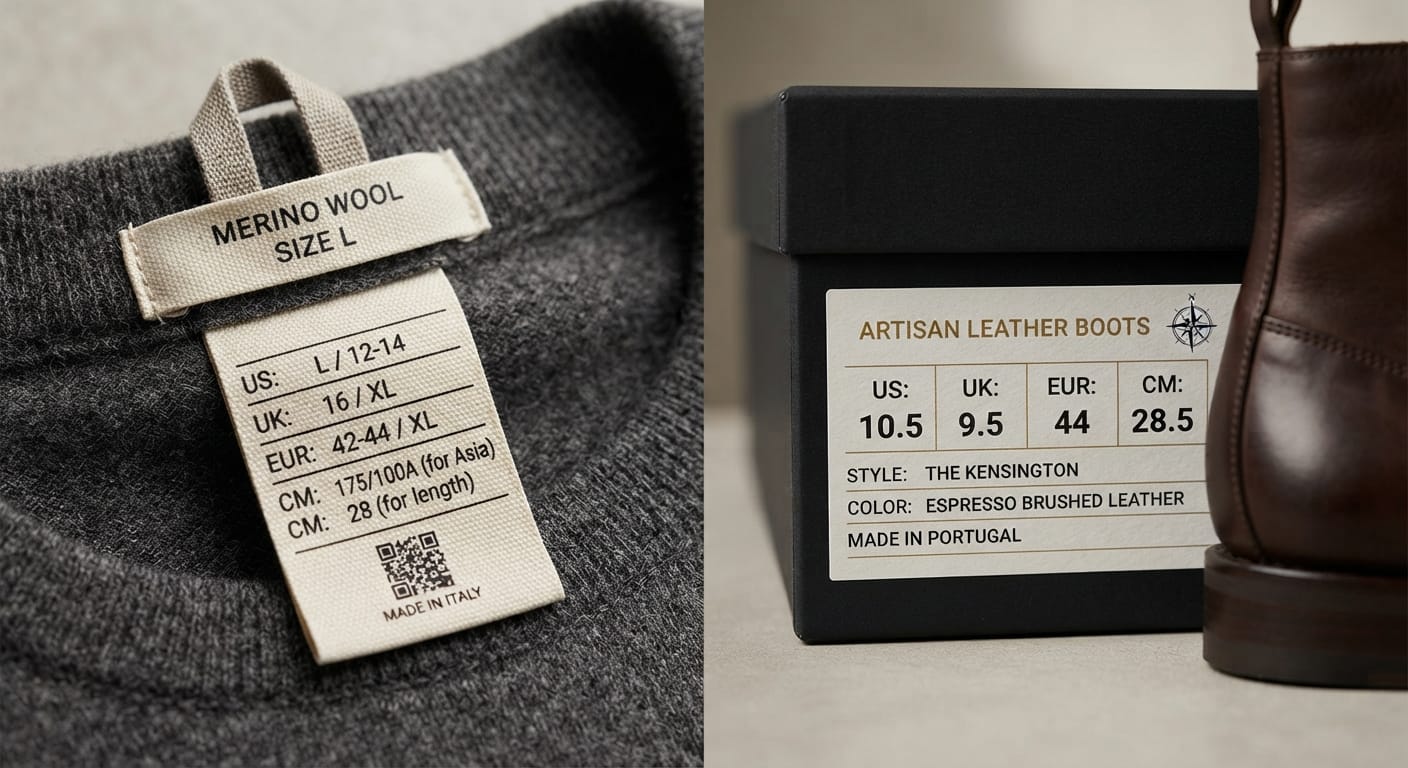
Shopping for clothing and footwear from international brands opens up a world of variety. However, the biggest hurdle for online consumers is the mismatch in sizing standards across countries. A US size 6 dress might correspond to a UK size 10 or a European size 38. Mastering the underlying principles of sizing systems and utilizing accurate conversion charts across US, UK, EU, and Asian markets allows you to order online with confidence, eliminating the risk of costly and time-consuming returns.
Why Do Sizing Standards Vary Across Countries?
This sizing mismatch is not random. Each geographical region developed its sizing framework based on the anthropometric characteristics of its local population and the history of its domestic apparel industry:
- United States (US): Primarily relies on inches. US clothing tends to feature a more generous fit (vanity sizing), offering relaxed cuts around the bust, chest, and waist.
- United Kingdom (UK): Also uses inches but operates on a completely different numerical scale than the US. For the same labeled number, UK sizes run 2 to 4 numbers smaller than US sizes.
- Europe (EU): Based on the metric system (centimeters). EU garment sizing is calculated directly from actual body measurements, delivering a tailored, contoured fit.
- Asia: Tailored for smaller bone structures and slender frames. Holding the same letter tag (S, M, L), Asian items typically run 1 to 2 sizes smaller than Western apparel.
Ultimate International Clothing Size Conversion Charts
Below are comprehensive cross-reference charts comparing sizing standards across major international markets for men and women.
Women's Clothing Size Conversion Chart
International Size | US | UK | EU | Japan / Asia | Bust (cm) | Waist (cm) | Hips (cm) |
|---|---|---|---|---|---|---|---|
XS | 0 - 2 | 4 - 6 | 32 - 34 | 7 - 9 | 78 - 82 | 60 - 64 | 84 - 88 |
S | 4 - 6 | 8 - 10 | 36 - 38 | 9 - 11 | 83 - 87 | 65 - 69 | 89 - 93 |
M | 8 - 10 | 12 - 14 | 40 - 42 | 11 - 13 | 88 - 92 | 70 - 74 | 94 - 98 |
L | 12 - 14 | 16 - 18 | 44 - 46 | 13 - 15 | 93 - 97 | 75 - 79 | 99 - 103 |
XL | 16 - 18 | 20 - 22 | 48 - 50 | 15 - 17 | 98 - 104 | 80 - 86 | 104 - 110 |
Men's Clothing Size Conversion Chart
International Size | Suit / Blazer (US/UK) | Suit / Blazer (EU) | Dress Shirt Collar (US/UK - inches) | Dress Shirt Collar (EU - cm) | Standard Height (cm) | Standard Weight (kg) |
|---|---|---|---|---|---|---|
S | 36 | 46 | 14 - 14.5 | 37 - 38 | 160 - 168 | 55 - 65 |
M | 38 | 48 | 15 - 15.5 | 39 - 40 | 168 - 175 | 65 - 75 |
L | 40 - 42 | 50 - 52 | 16 - 16.5 | 41 - 42 | 175 - 182 | 75 - 85 |
XL | 44 | 54 | 17 - 17.5 | 43 - 44 | 180 - 188 | 85 - 95 |
International Shoe Size Conversion Charts for Men and Women
Unlike clothing made from stretchable fabrics, footwear requires millimeter-level accuracy. Japan utilizes direct foot length in centimeters (CM) as its shoe sizing standard, serving as the most reliable reference point when converting across markets.
Women's Shoe Size Conversion Chart
Foot Length (CM) | Japan (JP / CM) | US Women | UK Women | Europe (EU) |
|---|---|---|---|---|
22.5 | 22.5 | 5.5 | 3 | 36 |
23.0 | 23.0 | 6.0 | 3.5 | 36.5 / 37 |
23.5 | 23.5 | 6.5 | 4 | 37.5 |
24.0 | 24.0 | 7.0 | 4.5 | 38 |
24.5 | 24.5 | 7.5 | 5 | 38.5 / 39 |
25.0 | 25.0 | 8.0 | 5.5 | 39.5 |
Men's Shoe Size Conversion Chart
Foot Length (CM) | Japan (JP / CM) | US Men | UK Men | Europe (EU) |
|---|---|---|---|---|
25.0 | 25.0 | 7.0 | 6.5 | 40 |
25.5 | 25.5 | 7.5 | 7.0 | 40.5 / 41 |
26.0 | 26.0 | 8.0 | 7.5 | 41.5 |
26.5 | 26.5 | 8.5 | 8.0 | 42 |
27.0 | 27.0 | 9.0 | 8.5 | 42.5 / 43 |
27.5 | 27.5 | 9.5 | 9.0 | 43.5 |
28.0 | 28.0 | 10.0 | 9.5 | 44 |
How to Accurately Measure Your Body & Foot Length at Home
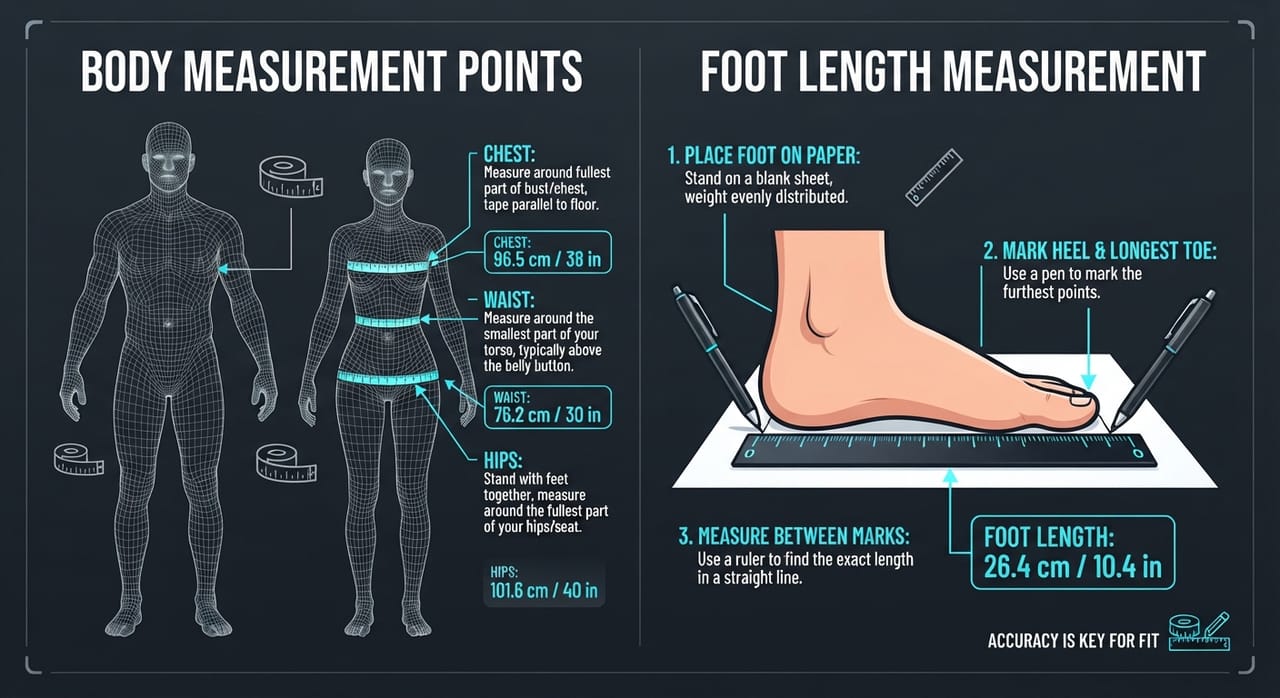
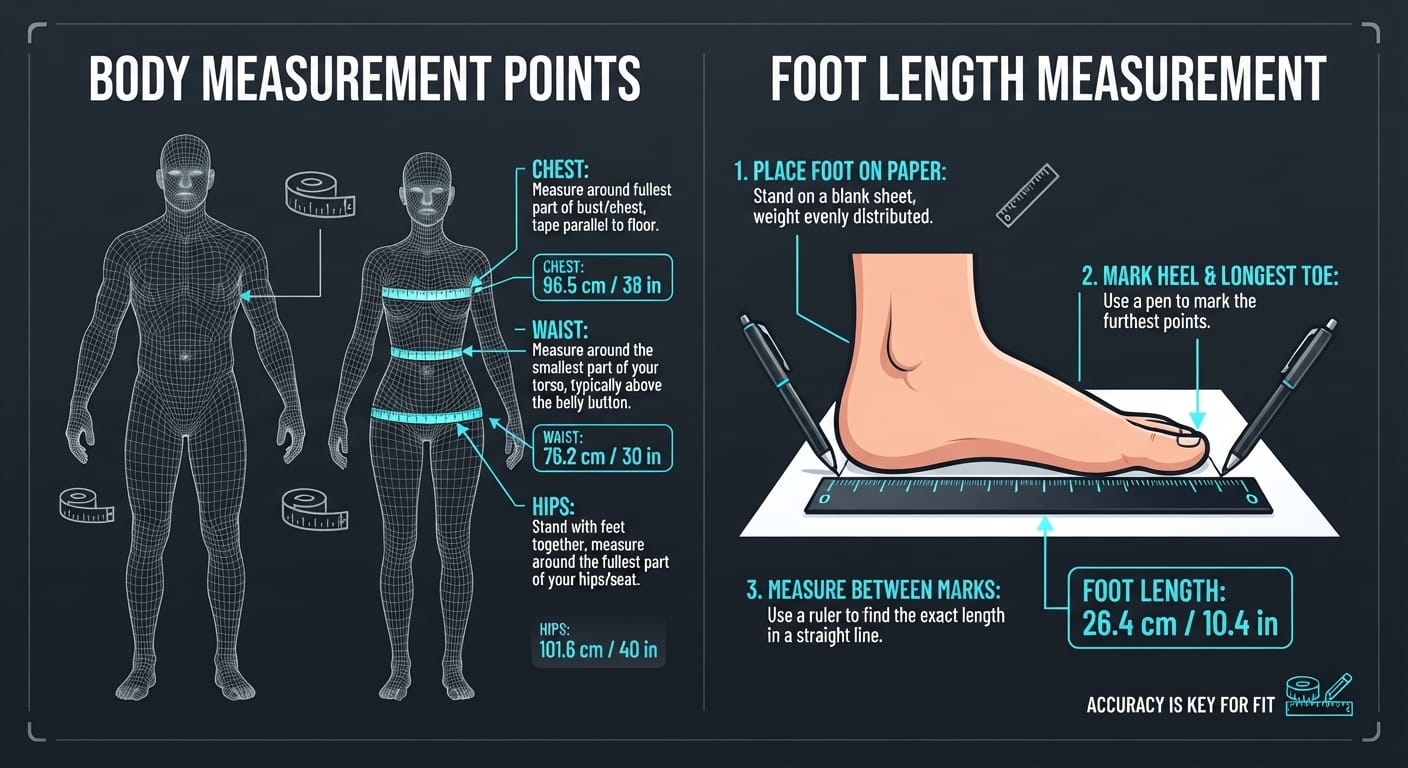
General conversion charts serve as a foundational guide. The most critical step is obtaining accurate body measurements recorded using proper technique.
Steps for Measuring Body Circumference for Clothing
- Bust / Chest: Wrap a flexible tape measure around the fullest part of your chest, keeping the tape parallel to the floor without pulling too tight.
- Waist: Measure around the narrowest part of your natural waistline (typically 2-3 cm above the belly button). Stand straight and breathe naturally.
- Hips: Stand with your feet together and wrap the tape around the widest point of your hips and buttocks.
- Shoulder Width & Neck Circumference (for Men): Measure from the tip of one shoulder bone across the back to the other; measure around the base of the neck for dress shirts.
Steps for Measuring Foot Length for Shoes
- Setup: Place a sheet of flat A4 paper on the floor flush against a straight wall.
- Positioning: Stand barefoot (or wearing the socks you plan to wear with the shoes) on the paper with your heel firmly touching the wall.
- Marking: Hold a pencil perpendicular at a 90 and draw a line at the tip of your longest toe.
- Measuring: Use a ruler to measure the distance from the edge of the paper (where your heel rested) to the drawn line. This measurement represents your precise foot length in centimeters.
3 Critical Rules When Shopping for International Fashion
Prioritize Brand-Specific Size Charts
Every fashion retailer operates on unique manufacturing specs. Zara (Spain) features longer cuts and narrower silhouettes, Uniqlo (Japan) offers roomier cuts catered to Asian proportions, and H&M adheres to relaxed European standards. Always check the official "Size Guide" on the brand's product page rather than relying strictly on generic conversion tables.
Pay Attention to Foot Width Indications
US and UK footwear brands categorize foot width explicitly using letter codes:
- Women: 2A (Super Narrow), B (Standard/Medium), D (Wide), 2E (Extra Wide).
- Men: B (Narrow), D (Standard/Medium), 2E (Wide), 4E (Extra Wide).
If you have wider feet and fall between two sizes, going up 0.5 size or selecting a Wide option (D for women, 2E for men) prevents side pinch and discomfort across the ball of your foot.
Examine Fabric Composition and Read Customer Reviews
Fabric composition dictates garment flexibility. Pure 100% Cotton or rigid Denim lacks elasticity, requiring you to stick strictly to your measurement or size up by 1 option if you sit between bounds. Conversely, blends containing Elastane/Spandex offer flexibility. Furthermore, customer review sections contain invaluable real-world feedback, such as "Runs small" (order a size up) or "Runs large" (order a size down).
FAQ - Frequently Asked Questions
1. Why do I fit a size M at Uniqlo but find a size M at Zara too tight or too long?
Uniqlo is a Japanese brand that tailors its sizing specs to Asian body proportions, offering balanced sleeve and torso lengths. Zara is a Spanish brand operating under European sizing standards designed for larger skeletal frames with longer arms and torsos. Consequently, when transitioning from Uniqlo to Zara, you should consider sizing down by 1 or opting for Zara's "Asian Fit" collection where available.
2. My foot measures 24.5 cm. Which shoe size should I choose for Nike vs. Adidas?
For a foot length o 24.5 cm (men's sizing):
- Nike: 24.5 cm corresponds to US size 6.5 / EU size39.
- Adidas:24.5 corresponds to US size 6.5 / EU size 40.
Note that Nike models generally run narrower across the midfoot than Adidas. If you have wider feet, choosing a 25.0 cm measurement (US size 7) in Nike provides a more comfortable fit.
3. How do I convert women's jeans sizing between US inches and European numbers?
US women's jeans are usually measured by waist size in inches (e.g.,26, 27, 28, 29). To convert this to European (EU) numeric sizing, simply add 10 to your US waist size:
- Jeans size 26 inches -> EU 36.
- Jeans size 27 inches -> EU 37/38.
- Jeans size 28 inches -> EU 38/39.
4. When buying international clothing for growing children, should I size by age or height?
Height and weight are far more reliable metrics than age. European children's brands like H&M or Zara Kids label sizes by height in centimeters (e.g., size 104cm fits children around 100-104cm tall). When buying children's wear internationally, base your decision on current height measurements and size up by 1 tier to account for international shipping transit times and rapid growth spurts.